Summary of Work
I was design owner for Apex’s major Legend Upgrades feature and an active contributor on the EVO overhaul for the 5th anniversary season. This included:
- Ideating and iterating on 120+ Upgrades for the full cast of Legends.
- Scoping production needs and downstream dependencies for all Upgrade related tasks.
- Implementing/scripting 60+ Upgrades.
- Coordinating with UI, audio, visual, and narrative teams for all Upgrades.
- Writing patch notes , participating in a Dev Diary, and interviewing with press (including Game Informer) and content creators.
Deeper Dive
In early ideation, I myself was one of the biggest skeptics of Legend Upgrades. In a sea of ever-shifting variables and randomness of a Battle Royale, Legends were the constant. Why are we elevating their importance and introducing more variability, especially when we’re already a complex shooter?
After some back and forth with design leads, I was convinced of the appeal around targeting Legends as a vector for more player expression. They saw me as the the right person for the job, given my deep knowledge of Legends.
My early design mantras around Legend Upgrades were:
- Less is more. Design for impact.
Understanding the scope of this feature was an early priority. Some advocated for three levels of Upgrades, but as we approached design-lock, I was adamant that two levels would provide a more focused player experience. From a dev perspective, this helped mitigate tech debt and allowed us to stay in scope with less Upgrades requiring downstream dependencies.

- Readability.
Upgrades shouldn’t massively shift how you play/counterplay a Legend. Every Legend has the same toolbox of abilities; Upgrades influence how you use those tools. In cases where we add a wrinkle to an ability via Upgrades, what additional feedback is needed? (i.e. Maggie’s Wrecking Ball can now explode as a fireball).
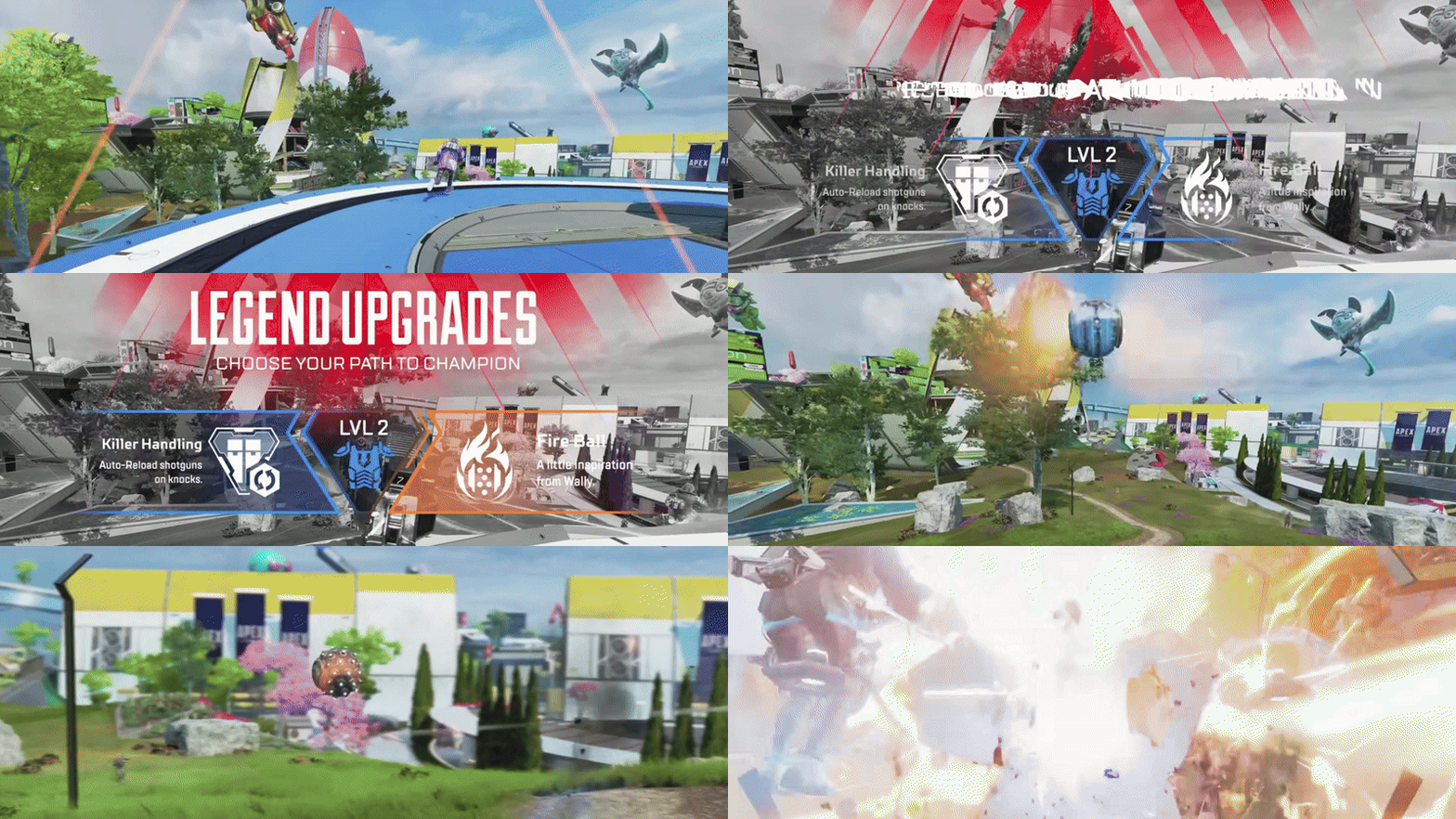
- Celebrate each Legend.
Upgrades should be on-brand and relevant to the base kit’s play patterns. Choices should be interesting, subjective, and context dependent. Octane scanning Ring Consoles might have ramifications in competitive play, but it’s more compelling for the reckless daredevil to the option to stack two identical upgrades (as he would say, “Plus Ultra!“).

Legend Upgrades were not enough on their own. Because Apex is a competitive shooter at its core, Upgrades that augment abilities don’t change the fact that players can get one-clipped by a Flatline when caught out with white EVO armor.
Armor is the single most important piece of loot in Apex. I pitched the idea of removing it entirely in favor of expanding EVO to become a larger progression system that ties Legend and armor level together. This was also an opportunity to allow more options to level-up: instead of strictly dealing damage to level up armor, players can now earn EVO in multiple ways (see the full list in the Breakout Blog Post) to level up their team and unlock Upgrades.
Removing armor as ground loot was the most contentious part of the EVO overhaul. In early playtests, the gap between experienced and novice players was big: low-skilled players felt they were at a disadvantage because they no longer even had the possibility of finding a purple, and they were accustomed to only earning EVO via combat.
We needed a new call-to-action that players could recognize as a way to level-up when combat wasn’t a comfortable option. Inspired by the Crafting system, I pitched the idea of EVO harvesters as POIs scattered across the map that promoted movement and progression now that the looting cycle was cut short with armors off the ground.

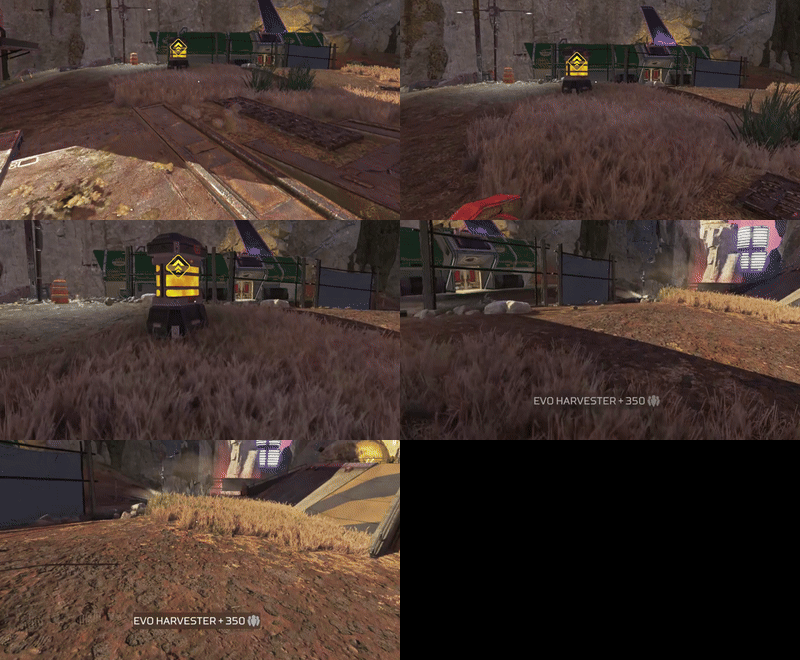
Senior Designer Connor Monahan was the feature owner for the expanded EVO system. I worked closely with him to flesh out the design and set EVO tunings (which haven’t been touched to this day… perfectly balanced 😉).
Legends Lead Designer Devan McGuire and Weapons & Loot Lead Designer Eric Canavese oversaw the design efforts for Season 20.
Results
Game Director Steven Ferreira praised the work the team had done for Season 20: “It has driven player satisfaction up to a level that we haven’t seen since the peak days of the franchise.” Characters with compelling upgrades, like Lifeline’s choice between a self-revive or a chance at a Kraber, saw an uptick in usage. Perhaps more importantly, typically popular picks (like Pathfinder and Horizon) saw a dip in popularity as players explored the added depth from the rest of the roster.
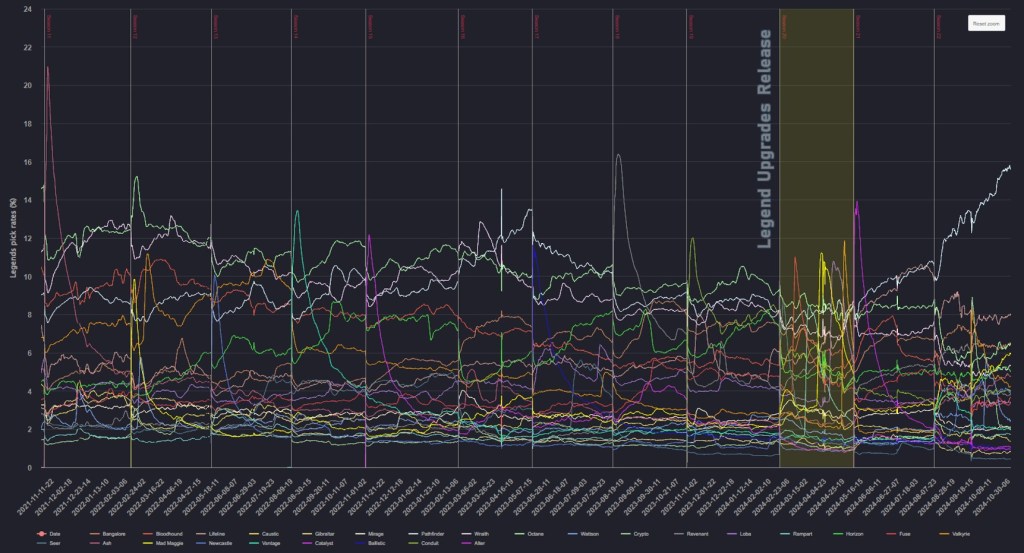
Source: Apex Legends Status
 John Larson